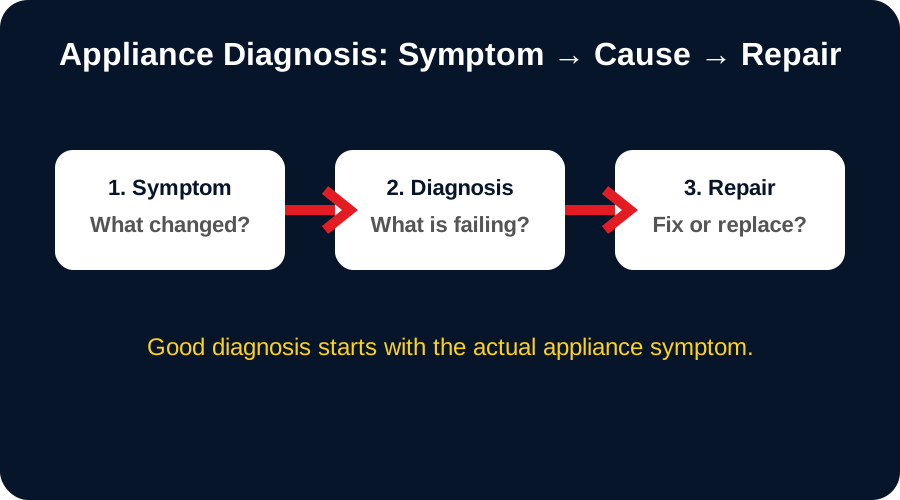
1. Describe the symptom
The most useful starting point is what the appliance actually does. “The refrigerator is running but the food is warm” is more useful than simply saying “the fridge is broken.”
2. Identify the appliance
Brand, model number, approximate age and the type of appliance help narrow down the design and likely diagnostic path.
3. Diagnose before replacing parts
A symptom can have several possible causes. Good troubleshooting checks the system and confirms the likely fault before replacing a component.
4. Decide whether repair makes sense
Repair decisions can depend on age, condition, expected repair cost, parts availability and how the appliance has performed overall.
5. Explain the next step
The goal is a clear explanation of what was found and what options make sense for the appliance.